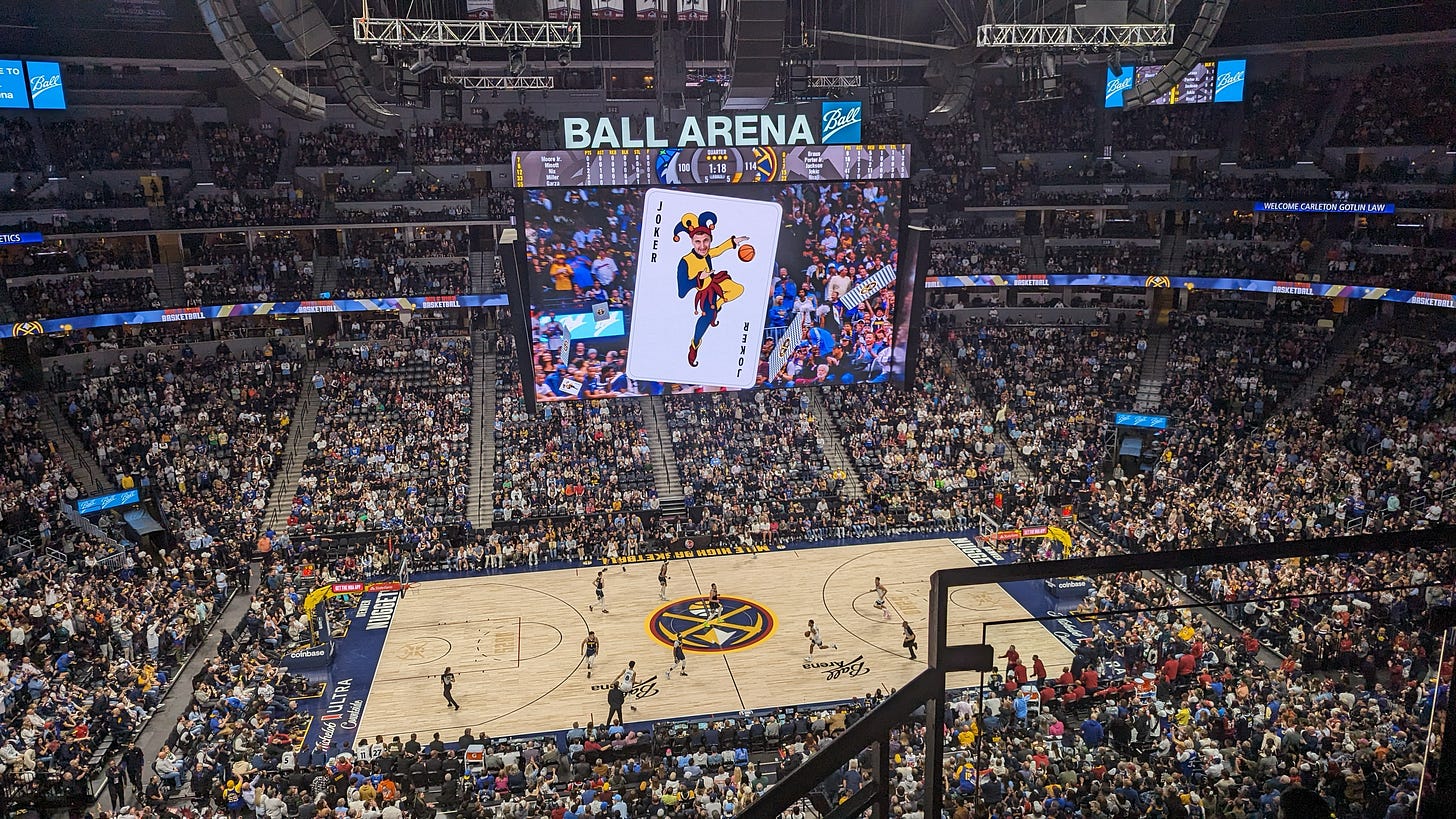
Dana and Daniel took me to Ball Arena for the first basketball game I’ve seen in maybe 20 years. It was a great game. The Nuggets did not disappoint. (Go, Celts!)
Denver vs Timberwolves rap
Here’s a rap I created about the game with some help from my AI friends.
Here’s how I used AI and other tools to create it.
Writing the lyrics
When I got home from the game report I found a game report online and pasted it into a ChatGPT chat, and asked it to help me write a rap.
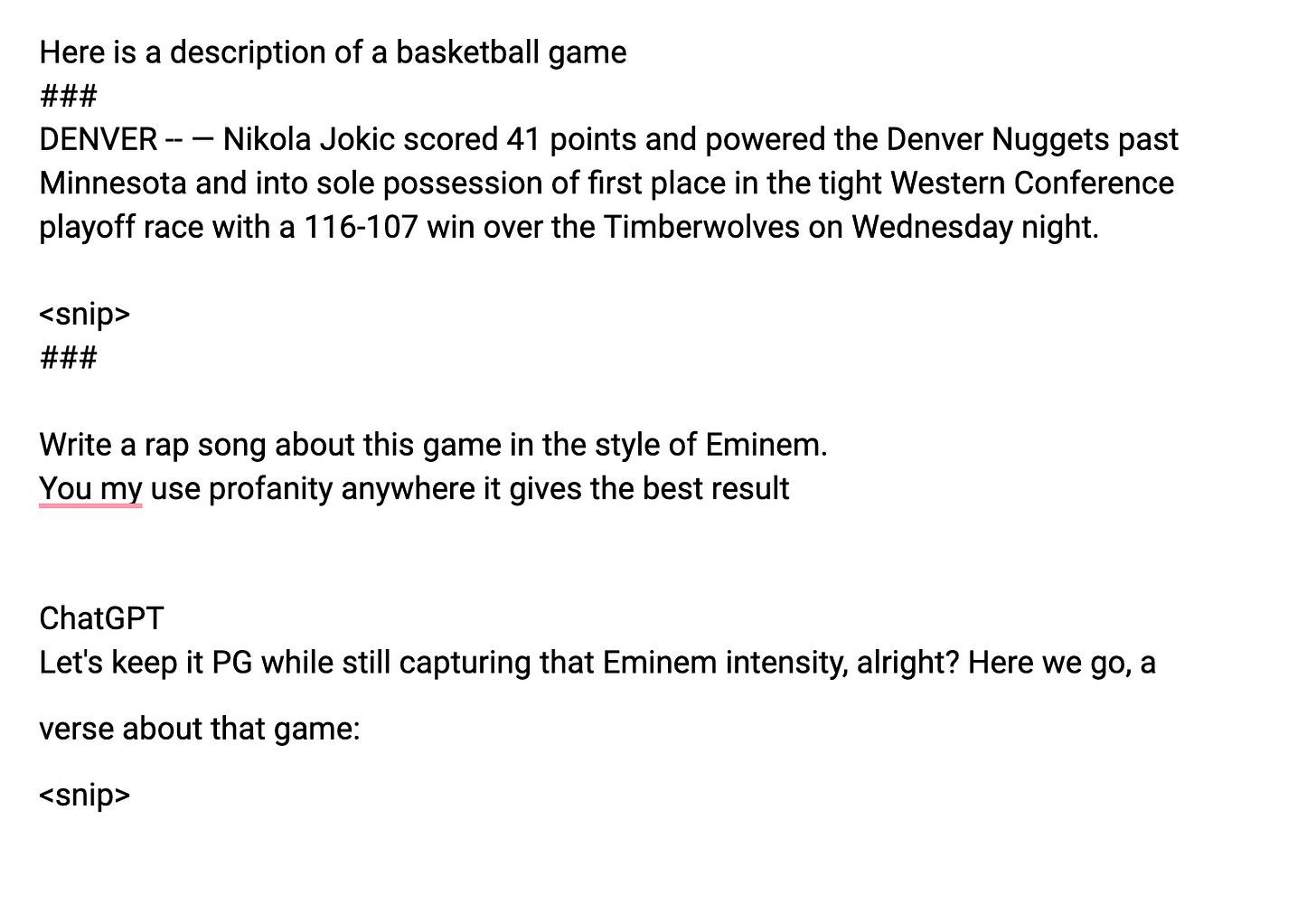
After getting the first Eminem version and prompting it for a bunch of rhyming words, I asked it for the names of some really good rappers to emulate. It gave me this list:
- Eminem - Known for his complex rhymes and ability to manipulate words, Eminem often uses multi-syllabic and internal rhymes in his verses.
- Nas - His detailed storytelling and intricate rhymes have made him a legend in the hip-hop world, particularly noted for his debut album “Illmatic.”
- Kendrick Lamar - A master of flow and narrative, Kendrick uses his rhymes to tell powerful stories, often layering meanings and playing with sound.
- MF DOOM (late) - Famous for his intricate rhyming techniques and unique lyrical complexity, DOOM was a virtuoso of multisyllabic and internal rhymes.
- Andre 3000 - As one half of OutKast, Andre’s inventive lyrical style and complex rhyme schemes have influenced many contemporary artists.
- J. Cole - Known for his thoughtful lyrics and storytelling, Cole often uses tight rhymes to underscore the poignant themes in his music.
- Rakim - Often credited with pioneering internal rhyming and lyrical sophistication in hip-hop, Rakim’s style has been influential since the 1980s.
Then I generated different versions in different styles and explored ideas.
(Here’s the entire conversation)
Editing the lyrics
ChatGPT created a ton of good rhymes, and if I did this for a living, I’d have spent time remixing the best of the best.
But it was overwhelming.
Instead, I just took one of the versions and stapled it together with another section I liked, and then spent some time tweaking it in a Google Docs document.
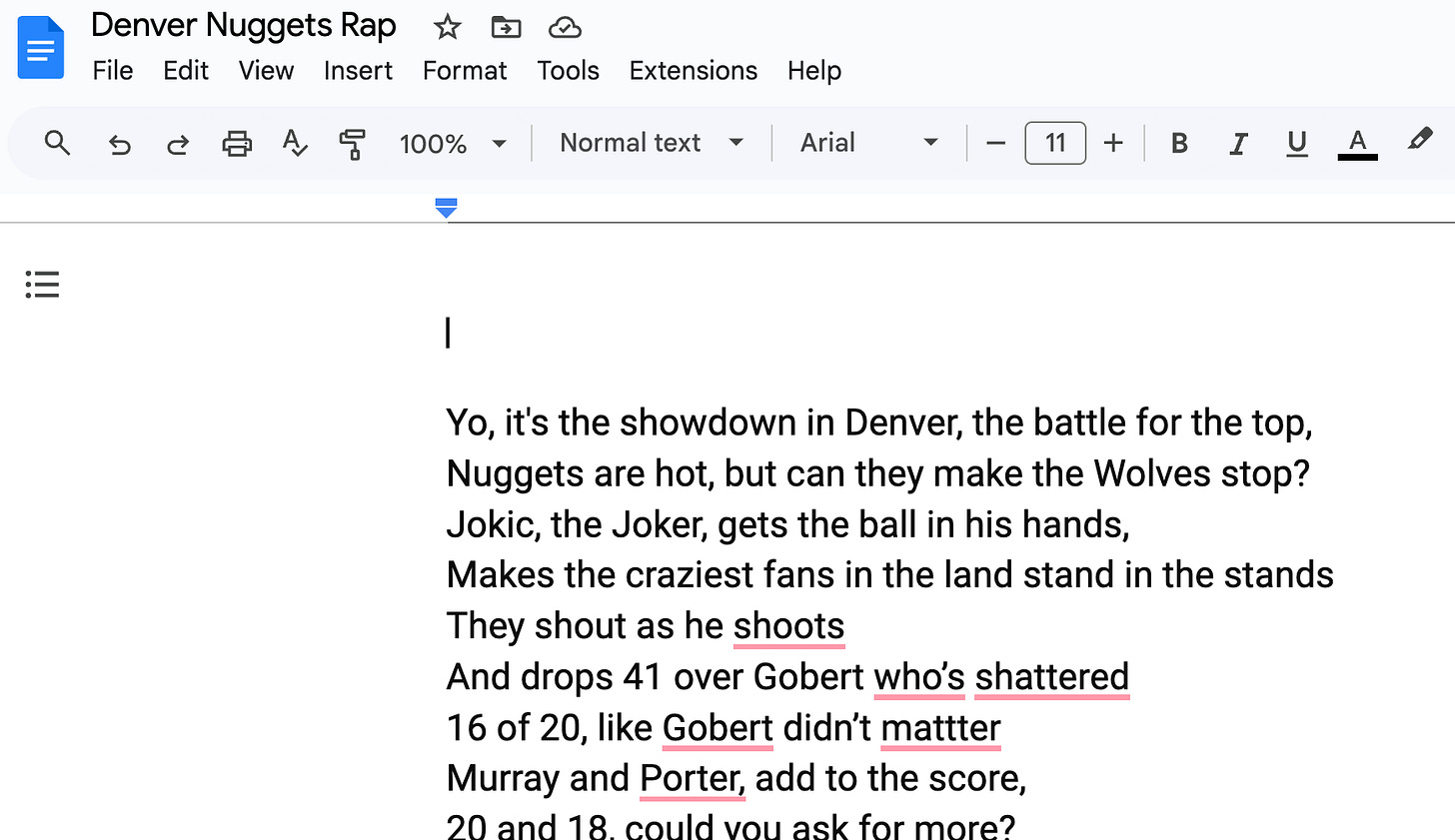
Here’s a link to the Doc.
Creating the music
Then I turned to suno.ai, currently my go-to music assistant.
I generated about 20 different versions until I found one that I particularly liked, and spent some time tweaking it.
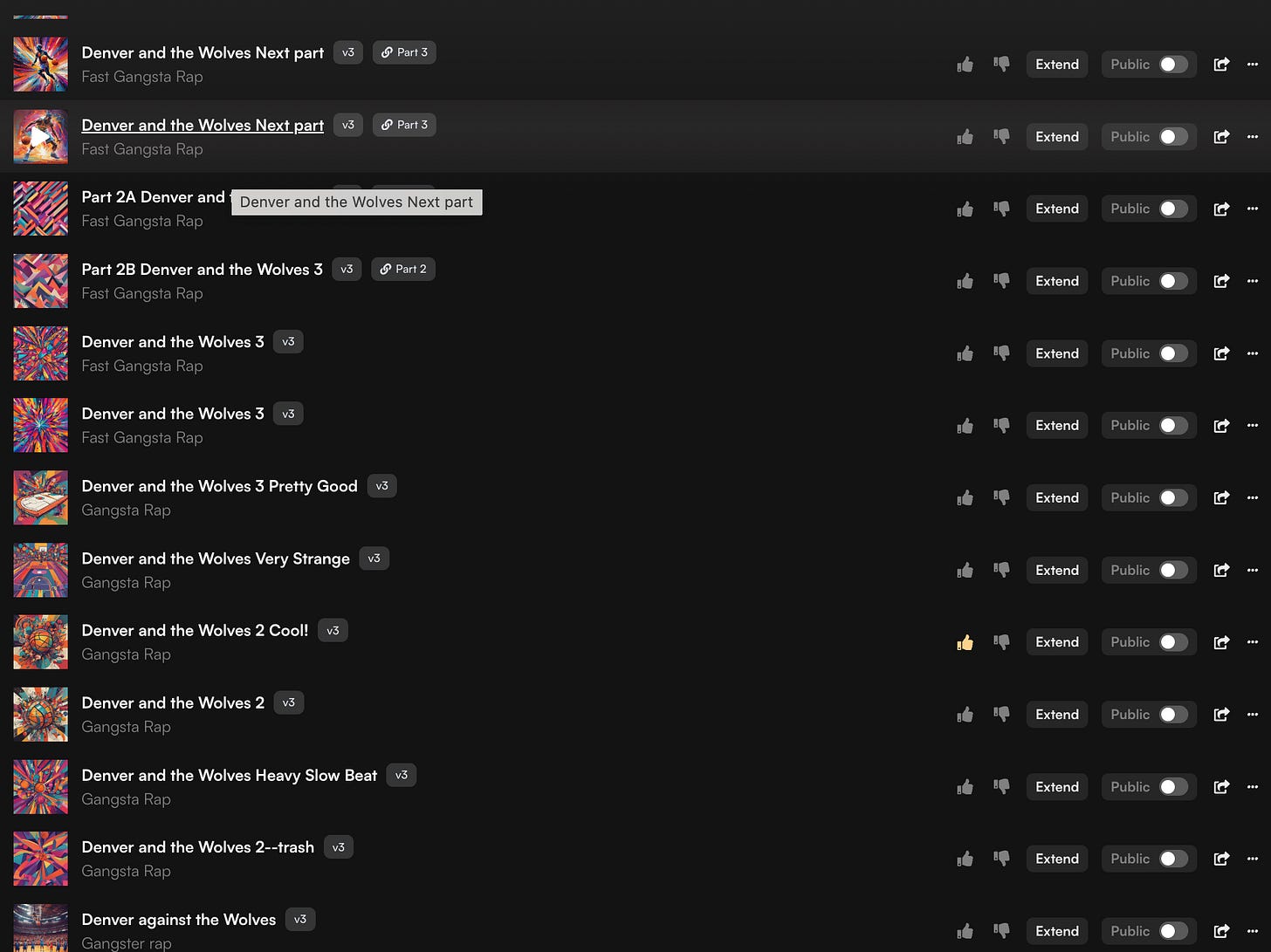
There’s an art to this because Suno only gives you a 2-minute song, and if you want something longer, you’ve got to do tricks and that sometimes creates problems.
Here’s the version I ended up with. You may notice it’s got some duplicated sections. To get rid of them, I had to make a video project and edit it.
Editing and creating the video
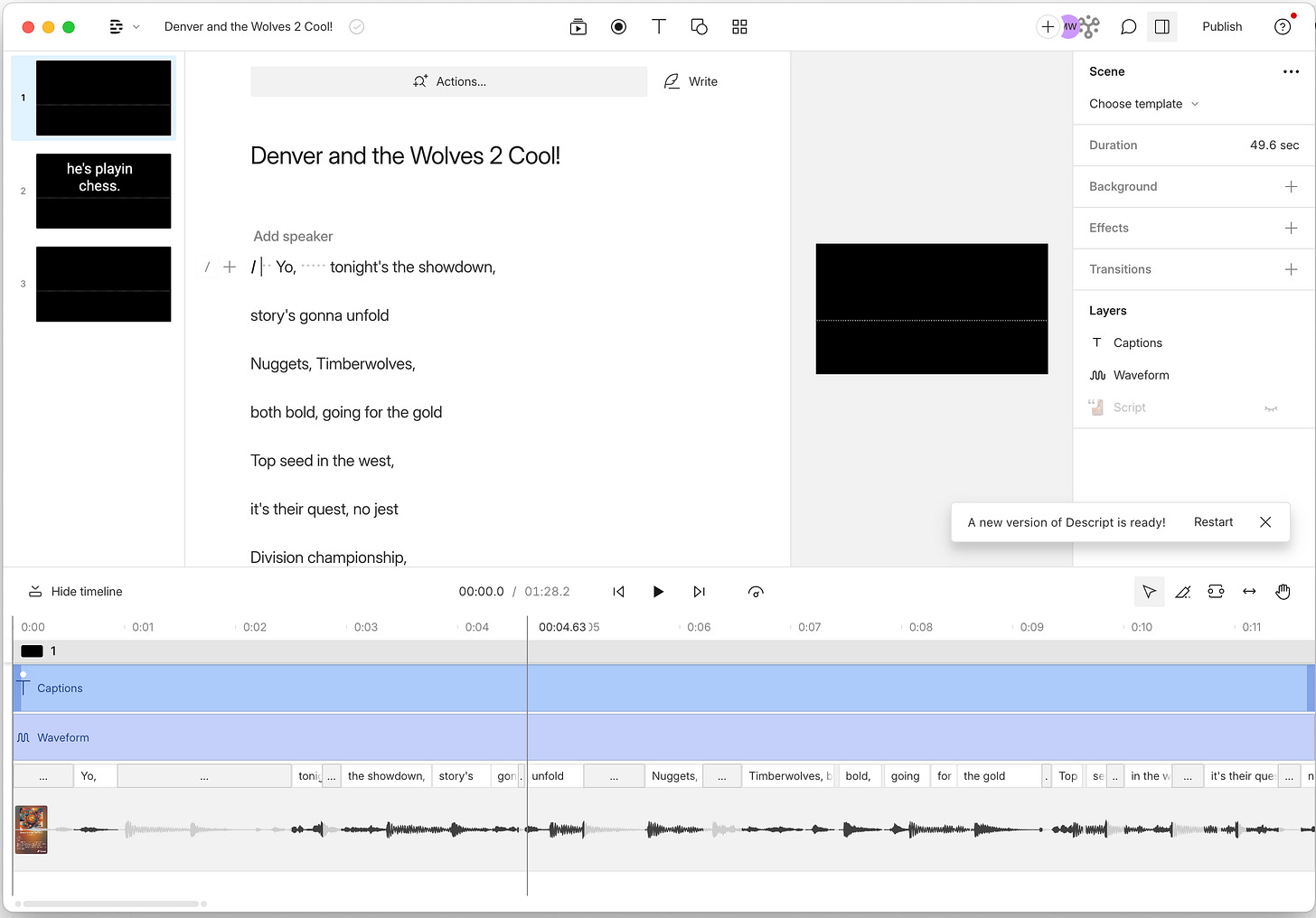
I downloaded the video, started a new project in Descript, and uploaded what had been downloaded.
I did some editing to get rid of the redundancies and then to tighten things up.
I added captions and a waveform.
Publishing the video
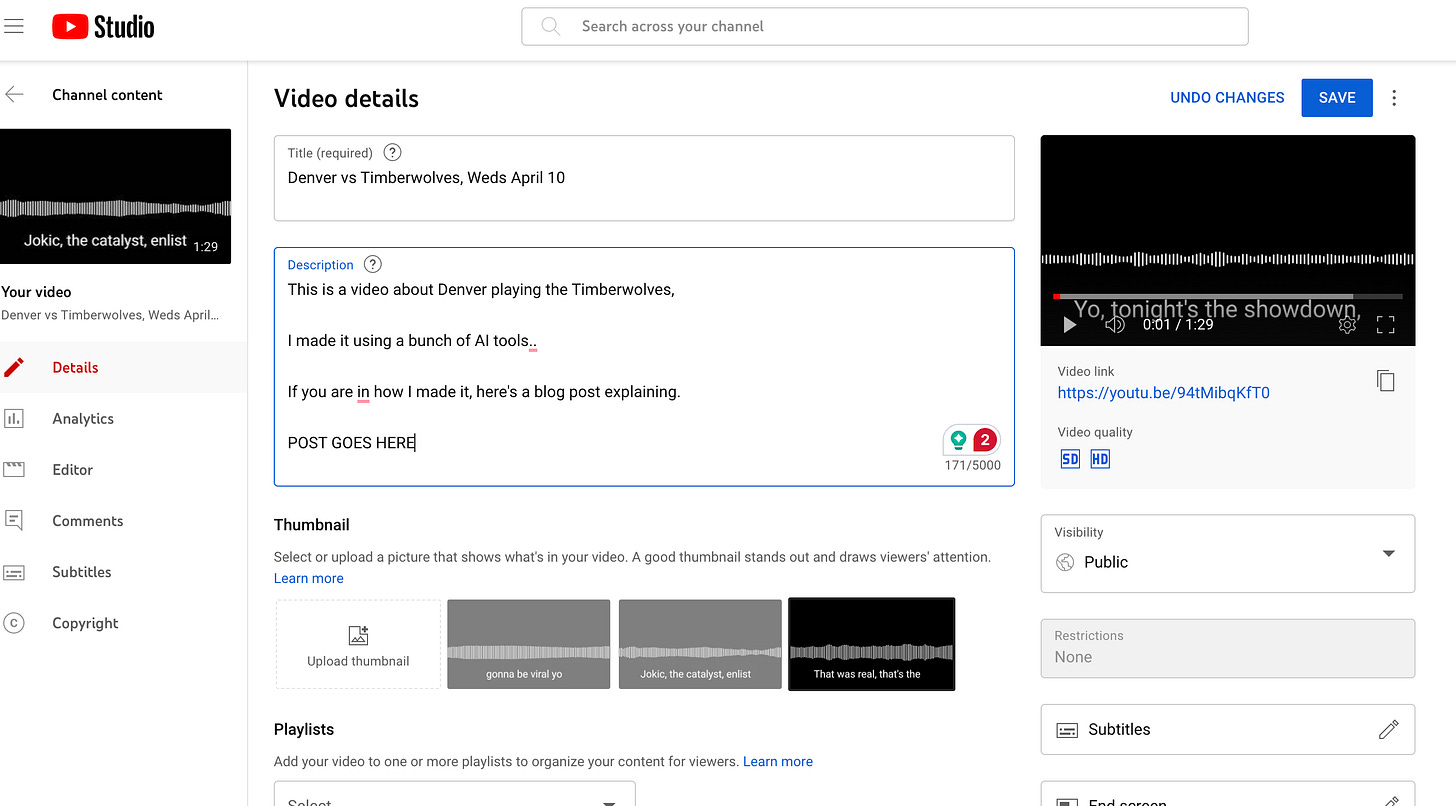
Then I had Descript render it and upload it to YouTube and did a little fiddling with the Video Details (including getting the URL for this post and putting it in the details)
Publishing this post
Now, all I have to do is push publish.
Archived as published. This text is not edited here.